
Meal Preparation Home Care — Nutritious, Home-Cooked Support
Meal preparation at home means more than getting a meal on the table. It's making sure your loved one is eating enough, drinking enough, and getting food that suits their specific needs — prepared by a carer who's been guided by our nursing team on what to watch for when appetite or eating habits start to change.
What is meal preparation home care?
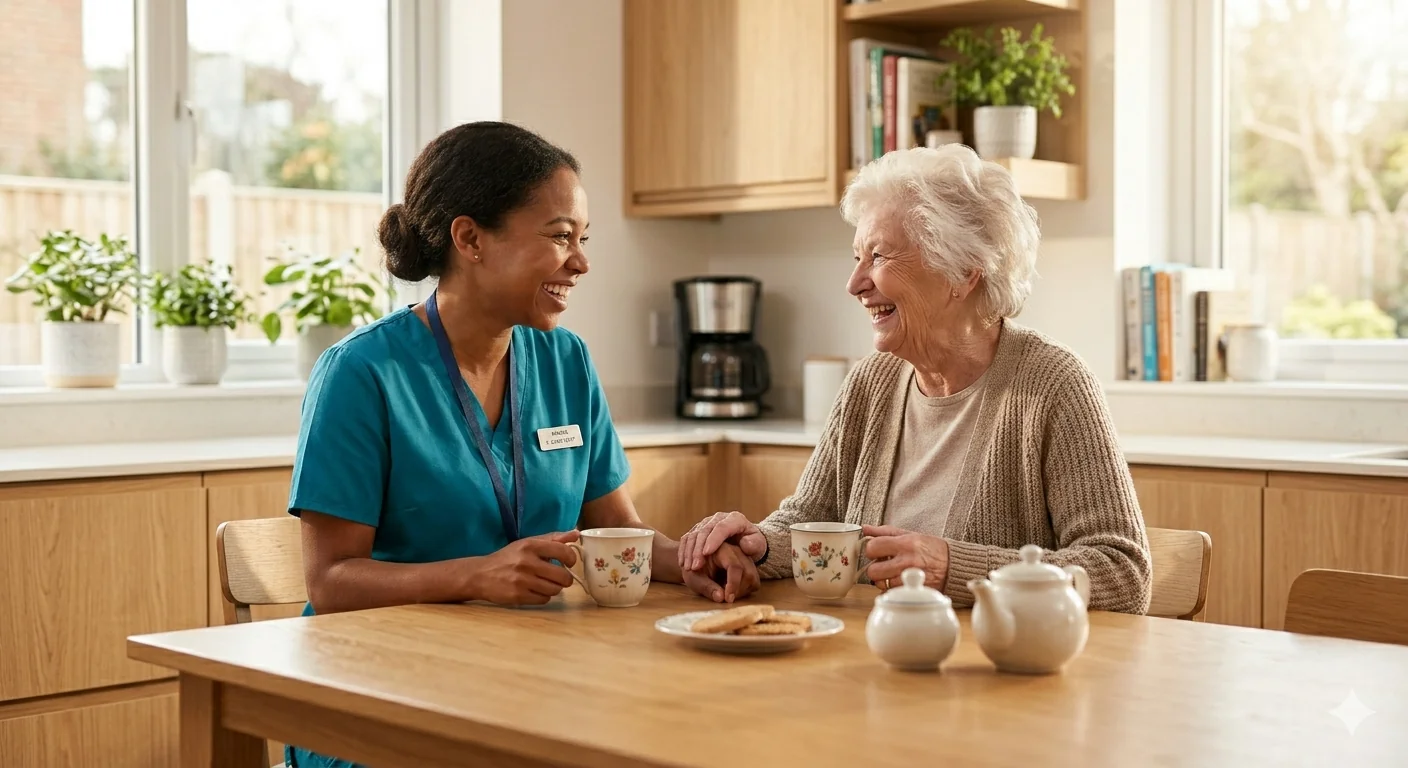
Meal preparation home care is support with planning, cooking and serving meals for someone who finds it difficult to manage this independently — whether due to mobility issues, memory difficulties, low mood or simply the effort of cooking for one. A carer prepares meals tailored to dietary needs and preferences, encourages regular eating and drinking, and can share the meal as a social occasion rather than a task done alone.
It's easy to think of this as a minor convenience. In practice, it addresses a genuine and under-recognised health risk. Around 1 in 10 older adults in the UK is estimated to be at risk of malnutrition, and dehydration in older people is directly linked to confusion, falls and hospital admissions that could often have been prevented.
Signs your loved one may need meal preparation support
Proper nutrition and hydration are essential for health and independence. If you notice warning signs around food or cooking safety, our team is here to assist.
Sign 1
You've noticed unintended weight loss, or their clothes seem looser than before
Sign 2
The fridge or cupboards contain little fresh food, or the same ready meals repeatedly
Sign 3
They've mentioned that cooking feels like too much effort, or they've stopped bothering
There are signs they're skipping meals
no washing up, no cooking smells, empty bins
Sign 5
They seem more confused or tired than usual, which can be a sign of dehydration
Sign 6
Mobility issues make standing at the cooker or carrying hot pans genuinely unsafe
Sign 7
They're eating alone every day and seem to have lost interest in food altogether
Sign 8
A recent diagnosis means their diet needs to change and they're unsure how to manage it
Noticing two or more of these signs?
Our nurse-led team can visit your parent at home in Edinburgh or Perthshire to carry out an honest, clinical evaluation.
What our meal preparation service includes
Planning and preparing meals tailored to dietary needs, preferences and any medical requirements
Cooking fresh, home-cooked food rather than relying on ready meals
Support for specific diets — diabetic, low-sodium, soft-texture, allergen-aware, and more
Encouragement and reminders to drink fluids regularly throughout the day
Company at mealtimes, making eating a social occasion rather than a solitary task
Dementia-safe meal planning — familiar foods, manageable portions, appropriate textures
Light kitchen tasks — washing up, tidying, ensuring the kitchen stays safe and manageable
Monitoring of appetite and intake, with any concerns reported back to family or our nursing team
Meals are planned around what your loved one actually enjoys — not a generic menu. Where there's a specific medical dietary requirement, our nursing team is involved in getting that right.
Why nurse-informed meal support matters
Most home care providers treat meal preparation as the least clinical service they offer — someone pops in, makes a sandwich, leaves. But nutrition and hydration in older age carry real health stakes. Poor nutrition contributes to muscle loss, weaker immunity and slower recovery from illness. Dehydration — often caused simply by a reduced sense of thirst as we age — can cause confusion that's easily mistaken for cognitive decline, and is a recognised contributor to falls.
At Zento, our carers are guided by our nursing team on what changes in appetite, weight or hydration might mean, and when they're worth flagging. A meal preparation visit isn't just about the food on the plate. It's a regular, informed check on one of the most basic and most overlooked aspects of your loved one's health.

How to arrange meal preparation support with Zento
Call us or complete our enquiry form
A quick, honest conversation about what your loved one needs — no pressure, no commitment.
We learn about their diet and preferences
We find out what they like to eat, any dietary or medical requirements, and how much support they currently need in the kitchen.
We build a meal plan and match a carer
A plan is put together around their preferences and needs, and we match a carer who can deliver it consistently.
Visits begin, and we keep watching
Meals start on your agreed schedule. Our team keeps an eye on appetite and wellbeing, and adjusts the plan if anything changes.
How much does meal preparation home care cost in Scotland?
Meal preparation is usually included as part of a broader home care visit, priced by the hour, rather than charged as a standalone service.
Where meal preparation forms part of a wider personal care package, it may be eligible for support under Scotland's Free Personal Care scheme for over-65s. Our team can help clarify what applies to your situation.
What families say about Zento's meal preparation service
Real stories from families across Edinburgh and Scotland who found nourishment, independence and peace of mind.
“Dad had lost weight and we hadn't clocked how little he was eating. Carer cooks a few times a week and sits with him. He's put a bit back on.”
Elaine C.
Corstorphine, Edinburgh
“Mealtimes with Mum's dementia were a nightmare — forgetting she'd eaten, refusing favourites. Her carer found what works and stuck with it. Much calmer now.”
Douglas W.
Livingston, West Lothian
“Mum's appetite dropped after Dad passed. Fresh lunches a few days a week have helped. Simple thing, but she talks about food again.”
Patricia N.
Crieff, Perthshire
Where we provide meal preparation support
Zento provides nurse-informed meal preparation support across Edinburgh and the Lothians from our Edinburgh office, and across Perthshire from our Crieff office.
Frequently asked questions about meal preparation home care
What is meal preparation home care?
Meal preparation home care is support with planning, cooking and serving meals for someone who struggles to manage this independently — due to mobility issues, memory difficulties or general difficulty cooking for themselves. A carer prepares meals suited to dietary needs and preferences, and can share the meal as a social occasion.
Can meal preparation help with specific dietary requirements?
Yes. Our carers can prepare meals suited to a range of dietary needs — diabetic diets, low-sodium diets, soft or modified-texture food for swallowing difficulties, allergen-aware cooking and more. Where a dietary requirement is medically significant, our nursing team is involved in getting the meal plan right.
How does meal preparation support someone with dementia?
Meal times can be particularly difficult for people living with dementia — changes in appetite, forgetting they've eaten, or resistance to unfamiliar food are all common. Our carers plan dementia-safe meals around familiar foods, manageable portions and appropriate textures, and maintain the same consistent approach to reduce confusion and stress at mealtimes.
Can carers monitor for signs of malnutrition or dehydration?
Our carers are guided by our nursing team on what changes in appetite, weight or hydration might indicate, and are attentive to early warning signs during visits. While this isn't a clinical assessment, it means changes are more likely to be noticed early and flagged to family or, where appropriate, a GP — rather than going unnoticed until they become more serious.
Is meal preparation available alongside other home care services?
Yes. Meal preparation is often combined with personal care, companionship or medication support as part of a broader care plan. Our nursing team can help you work out what combination of services would genuinely suit your loved one's situation.
Families often combine meal preparation with...
Speak to our team about meal preparation
Getting nutrition right matters more than it might seem. Our team is here to talk through what support would genuinely help — with no pressure and no obligation.
No pressure. No obligation. Honest advice from our registered nurses.